(De) and (Re) Construction

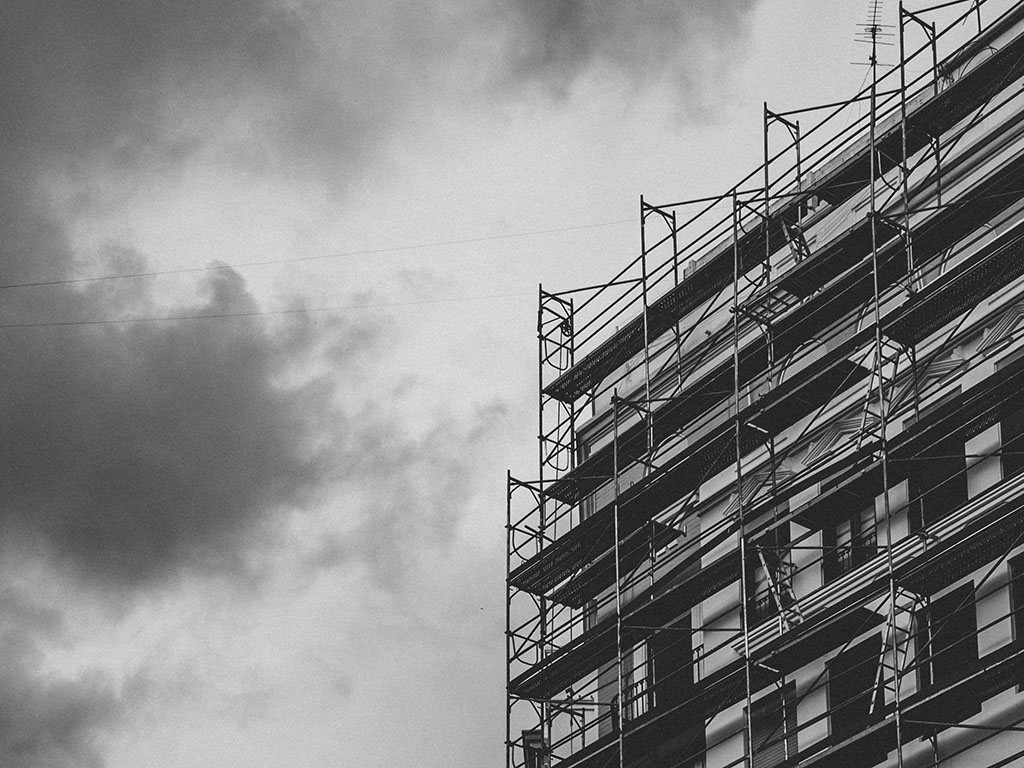
As civilization (?) expanded westward, everything had to be built up from scratch. Developing new land, erecting new structures, creating new cities. But this era has long since passed. Even in China, where up to 20 new cities are being built every year, the bubble is about to burst. Construction is increasingly shifting from a practice of creating new built environments, to renovating , repairing, and sometimes just removing the existing structures. And what are we to do with all the existing materials?
Re-using of materials has long been the mantra of our schoolchildren, and many industries have also seen the wisdom of providing for the recycling of the product in its end use. For example, in the US, 95% of “junked” cars are processed for recycling, with about 75% of the car’s manufactured content mostly metals) eventually being recycled for raw material use.

One of the main reasons automobiles could be recycled was due to the nature of metals, and the ability to purify and separate out elements for re-use in their raw state. Construction is not quite so straightforward, since it involves many more materials which are intermixed within the same assembly. Possibly the “cleanest” of materials for construction reuse is concrete. The only problem has always been the removal of rebar, but one solution has been invented by a company in Ohio , who attached a magnet to the excavator bucket, which can be activated as it runs over a pile of crushed concrete to pull out the rebar. The cleaned, crushed concrete can be re-used for roadbed and rebar is fully recyclable. In some areas, this has grown to be a sizeable business, such as Recycled Materials Company, which was launched by the need to demolish and recycle the concrete at the old Stapleton Airport in Denver.

More difficult is the repurposing of all the miscellaneous materials from deconstruction. Here again, there is a business opportunity. Instead of paying to have a building demolished, an owner can hire a deconstruction arm of a non-profit company (such as Habitat Re-Store) to remove the property as a donation to a material re-use store. The owner gets a tax deduction, and the store gets paid for receiving merchandise. They get paid again for selling it. Of course, the cost of removal may exceeds the removal revenue, but even then – Habitat uses volunteers!

Renovation companies are growing. From my experience, the difference between a successful operation and a big junkyard is in the systematic documenting of materials, making this available on the web, and keeping good business practices. Overstuffed, cat-infested warehouses just get more material, tend to hike up their prices to overcome the low sales, and eventually go out of business. It is a business.

One person who has done this well, in the re-use of industrial byproducts and waste for the use in construction and other industries is Damon Carson, of Repurposed Materials. Because the company is selective in the materials they gathers, and can provide a fairly steady supply, it is possible for entrepreneurial ventures like Luxwood to manufacture furniture with the use of reclaimed wood.

The problem in developing a business model in construction which could accommodate the use of repurposed materials is the extra cost of sourcing this material and adjusting the construction process to accommodate for special installation. Such a scenario could be addressed through a “joint venture,” so to speak, with the owner as the scouting party. A scope would need to be developed for acceptable type of materials, and specifications developed to help guide owners choices. The material types might start with reliable local supplies of recycled materials. While this requires a higher degree of organization on the contractor’s part, in order to be more flexible without upsetting the core building process, I see evidence of this trend growing. Not only for homeowners, but also commercial properties – where owners are looking for more unique architecture.


On fifth try, Puck changes finally pass muster

Jared Kushner’s scaled-down plans for an addition to top of the landmarked SoHo building finally gets the thumbs up from the Landmarks Preservation Commission.

It looks like five times is the charm for Jared Kushner of Kushner Cos. and his plans to make additions to SoHo’s landmarked Puck Building.

The city Landmarks Preservation Commission unanimously approved a scaled-back version of the developer’s plan to build atop the 203,000-square-foot, mixed-use building at 295-309 Lafayette St., at East Houston Street, on Tuesday. The approved additions are 20 feet shorter than the previous plan, courtesy of reduced ceiling heights. Meanwhile, the size has been scaled back by approximately 1,500 square feet, and the materials were changed from glass and metal to predominantly masonry and brick in order to match the existing building. The proposal also includes a restoration of the 10-story Romanesque revival-style building’s original parapet and crenellations. Mr. Kushner’s architects presented the original proposals three months ago.

All the commissioners were pleased with how far the project has come since they first saw it in September, and three subsequent times after that, according to a spokeswoman for the Landmarks Preservation Commission.

“I am very pleased with the results. We got an extension approved that allows us to go forward with a special project,” said Mr. Kushner, in a statement. “The additions to the building will further enhance one of the most iconic buildings in the world.”

“They’ve reached the target of minimalism in terms of massing,” said Landmarks Commissioner Michael Devonshire, an architectural conservator, in a statement. Landmarks Commissioner Michael Goldblum added that Mr. Kushner showed, with this version, “a tremendous willingness to exercise modesty and restraint.”

Even the local preservationists seemed pleased with the revised plans, at least for now.

“We are very glad that the Landmarks Preservation Commission listened to calls from New Yorkers to reject prior versions of this proposal, which would have overwhelmed and fundamentally changed one of our city’s most beloved landmarks,” said Andrew Berman, the executive director of the Greenwich Village Society for Historic Preservation, in a statement. “Only time will tell if the final, scaled–back version approved by Landmarks today is truly worthy of this great New York landmark.”


Read more: http://www.crainsnewyork.com/article/20111220/REAL_ESTATE/111229981#ixzz1jpUUJHEv

 Puck Building Jared Kusher

CoStar Group [+] Enlarge
The city’s Landmarks Preservation Commission unanimously approved Jared Kushner’s plan to build atop the Puck Building.

Read more: http://www.crainsnewyork.com/article/20111220/REAL_ESTATE/111229981#ixzz1jpZPRj8K

In Detail> Frick Portico Gallery

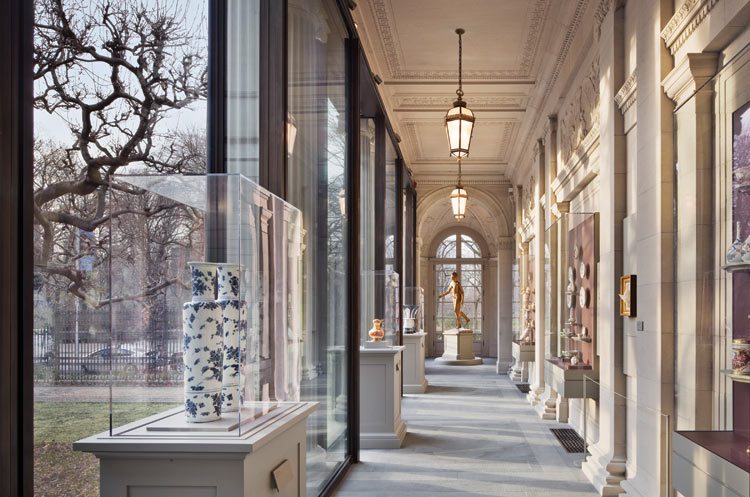
A Beaux-Arts porch transforms into an light-filled exhibition space.

Davis Brody Bond created a climate-controlled gallery from one of the Frick mansion’s open air loggias.
Paul Rivera

Davis Brody Bond Architects & Planners with Renfro design Group

Balanced on a pedestal at the end of the Frick Collection’s newest gallery, Diana, goddess of the chase, appears to have just leaped back across Fifth Avenue after a little hunting in Central Park. That this late-18th-century statue by Jean-Antoine Houdon was allowed to emerge from storage and strike a pose against an appropriately sylvan backdrop is one of the highlights of a thoughtful renovation led by Davis Brody Bond (DBB).

The Portico Gallery for Decorative Arts and Sculpture, the museum’s first new exhibition space in 35 years, was created from a south-facing loggia running along the Frick mansion’s ample front yard. The project came about when a donor’s gift (an extensive collection of porcelain) required additional display space. DBB and former Frick director Anne Poulet decided to take a cue from the 1914 building’s original architect, Thomas Hastings of the firm Carrère and Hastings, who, just after completing Henry Frick’s main house, immediately began sketching up a proposal for a sculpture gallery addition.

   
Left to Right: Thomas hastings’ 1916 drawing for a proposed sculpture gallery at The Frick mansion; a plan of the New Gallery with ITS Bluestone Floor; and a section showing DAvis Brody Bond’s new glass curtain wall and ventilation system.  (right).
Courtesy the frick collection/DBB
 

Hastings’ scheme went on hold once the United States entered World War I in 1917 and never came to pass due to Frick’s death in 1919. But almost a century later, that plan to create a sculpture gallery connected to the main house led DBB to consider the disused colonnaded loggia, whose decorative limestone relief carving has been fading due to exposure to corrosive exhaust fumes from Fifth Avenue traffic. Part of the original house, the long and narrow 815-square-foot loggia was accessible from the library, but had long been closed to museum goers.

The new gallery’s southern orientation means copious amounts of sunlight, an issue for paintings but less so for sculpture and ceramics. “We wanted to maintain the character of an outdoor space,” said DBB partner Carl Krebs, whose team specified low-iron glass panels to fill the spaces between the columns. The panels, some of the largest in production at approximately 14 feet by 7 feet by 2 inches, are cantilevered from below, resting in shoes secured 16 inches below the floor. Framed in bronze and set slightly back from the outmost edge of the loggia’s floor, the glass panels defer to the limestone columns, allowing the space to retain its original appearance both from the interior and the exterior.

   
LEFT TO RIGHT: Illuminated at night, the Gallery becomes a vitrine for sculpture and ceramics; the modernist Curtain Wall defers to the Loggia’s Beaux arts Colonnade; from the Rotunda, Houdon’s Diana The Huntress (1776-1795) overlooks the 815-Square-foot gallery.
Paul Rivera
 

The loggia’s stone paving was too damaged to be saved, but removing it allowed DBB to install power lines and a radiant heating system below for finely tuned climate control. Ventilation of the space was made easy thanks to a series of existing grates running along the floor of the interior wall, where the gallery’s main display cases are mounted. The grates originally allowed air into servant’s quarters in the basement, and DBB took advantage of the subterranean space to install new air ducts. Lantern-style custom lighting fixtures modeled on those found elsewhere in the house hang from the ceiling of a newly insulated roof; a striking bluestone floor replicates the pattern of the early 20th-century paving, running the length of the gallery and culminating in Diana’s oval rotunda.

Molly Heintz